Product · Fine Robusta
Fine ROBUSTA Khe Sanh
Unlike Arabica, Robusta leads with a pronounced bitterness and a high caffeine content — a dense, powerful cup that carries milk and sugar without disappearing. Ours is graded Fine Robusta, not commodity grade.
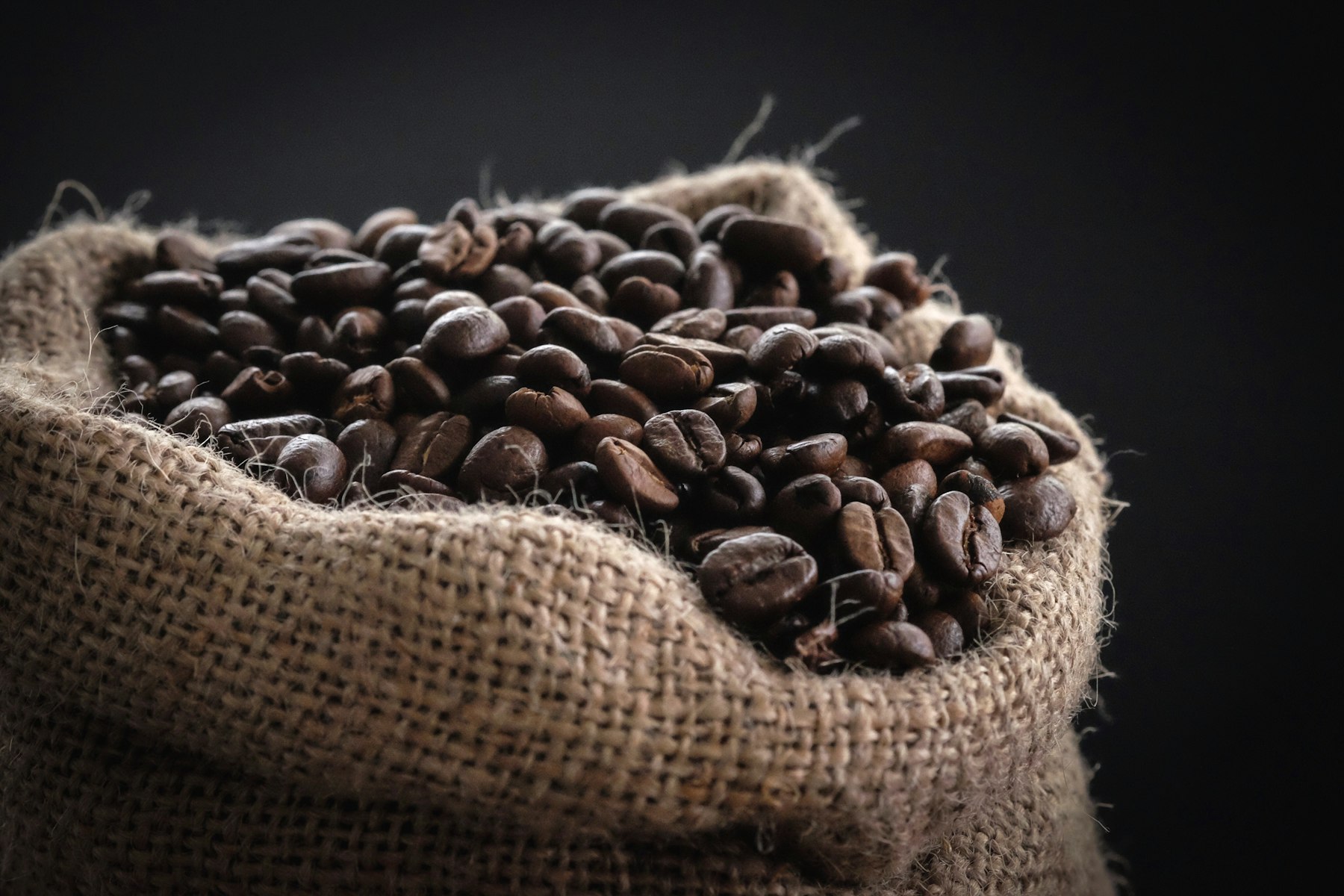
Bean characteristics
What happens when a common species meets good ground
Robusta has carried an unfair reputation for decades, largely because buyers compare strip-picked commodity lots against specialty Arabica. Our Robusta follows the same protocol a specialty Arabica lot would: multiple selective picking passes, same-day float sorting, raised-bed drying turned every two hours, and a final hand sort before roasting.
Beans grade at screen 18 and above (over 7.1 mm), with bulk density of 700–720 g/L — above the 650 g/L typical of lowland Robusta, thanks to the 620–750 m altitude and the wide diurnal temperature swing at Khe Sanh. Category-one defects stay under 11 per 300 g of green coffee, which is what qualifies the lot as Fine Robusta under the Coffee Quality Institute protocol.
The bitterness here comes from chlorogenic acid lactones, not from unripe or over-fermented beans. That is the difference between a phin that tastes full-bodied and one that strips the tongue — two things routinely confused with each other.
| Attribute | Value |
|---|---|
| Species | Coffea canephora, selected |
| Origin | Huong Hoa – Khe Sanh, Quang Tri, 620–750 m |
| Screen size | 18 and above (>7.1 mm) |
| Processing | Natural, raised bed, 16–20 days |
| Moisture at intake | 10.5 – 11.5% |
| Defects per 300 g | Under 11 category one |
| Bulk density | 700 – 720 g/L |
| CQI Fine Robusta score | 81.5 / 100 |
| Packing | 250 g · 500 g · 1 kg · 5 kg · 30 kg green |
Roast levels
Three profiles from one green lot
Tell us the brewing equipment and we select the profile. You do not have to buy one roast level and make it work everywhere.
| Profile | Agtron | Batch time | DTR | Dominant flavours | Recommended for |
|---|---|---|---|---|---|
| Medium | 46–50 | 11:30 – 12:10 | 20–22% | Roasted cashew, malt, light bitterness | Espresso machine, cold brew |
| Medium-dark (default) | 38–42 | 12:20 – 13:00 | 22–24% | Dark chocolate, dry wood, heavy bitterness | Traditional phin, iced milk coffee |
| Dark | 30–34 | 13:10 – 13:50 | 24–26% | Smoke, burnt caramel, intense bitterness | Phin with condensed milk, sock-brewed coffee |
Why not roast lighter?
Why not roast darker?
How long should it rest?
Brewing
The Vietnamese phin and the espresso machine
Two very different routes for the same bean. These are the bar-tested starting recipes we use in Khe Sanh.

| Step | Action | Parameter |
|---|---|---|
| 1. Preheat | Rinse the phin and glass with boiling water | 30 ml, discard |
| 2. Dose | Add grounds, tap level — do not compress | 25 g at 600–800 micron |
| 3. Gravity press | Rest the press plate on top, no screwing down | Light pressure only |
| 4. Bloom | Add 20 ml and let the bed swell | 30 seconds at 93 °C |
| 5. Main pour | Fill the chamber and cover | 70 ml at 92–95 °C |
| 6. Drip | Let it run without interference | 4–6 min, yields 60–70 ml |

| Method | Ratio | Time | Temperature |
|---|---|---|---|
| Espresso for iced black | 18 g → 36 g | 28–31 s | 92.0 °C |
| Espresso for condensed milk | 19 g → 34 g | 29–32 s | 92.5 °C |
| Cold brew, immersion | 1:12 (80 g / 1 L) | 16–18 h | 4 °C |
| Cold drip | 1:10 (100 g / 1 L) | 3–4 h | Iced water |
| Moka pot, 6 cup | 22 g → 120 g | 4–5 min | Low flame |
A note on water: Robusta tolerates harder water better than Arabica, but keep total dissolved solids between 90 and 140 ppm. For cold brew, remineralised RO water gives a cleaner cup with less metallic edge than boiled and cooled tap water.
Pricing
Fine Robusta wholesale tiers
| Monthly volume | Price / kg | Included |
|---|---|---|
| Retail 250 g – 1 kg | $6.90 | Whole bean or ground to your method |
| 5 – 19 kg | $6.10 | Weekly delivery, choice of roast level |
| 20 – 49 kg | $5.70 | Phin and cold brew recipe support |
| 50 kg and above | $5.20 | Private-label bag printing |
| Green, FOB Da Nang | On request | From 300 kg, 30 kg GrainPro bags |
FAQ
Common questions about Robusta
›How is Fine Robusta different from commodity Robusta?
Three measurable differences: ripeness at harvest (above 95% versus 60–70% for strip-picked lots), defect count per 300 g of green coffee (under 11 category-one defects versus 25–40), and drying method (turned raised beds versus bare concrete). The result is clean, round bitterness instead of astringency, with none of the earthy or musty notes people associate with Robusta.
›What cup score does it hold?
81.5 on the Coffee Quality Institute Fine Robusta protocol, which is the threshold for the Fine Robusta designation. Scores are issued per lot and the sheet travels with every wholesale shipment.
›How much caffeine does it contain?
Approximately 2.6% on a dry basis, roughly double Arabica at 1.2–1.4%. A 90 ml black phin brewed from 25 g of grounds delivers around 180–220 mg of caffeine, noticeably more than a double shot of pure Arabica espresso.
›Can it be used on an espresso machine?
Yes, and it suits the Vietnamese iced milk coffee style very well. Use 18 g in, 36 g out over 28–31 seconds at 92 °C — slightly cooler than the blend, because the darker roast scorches more easily at high temperatures. For a coffee that also works for cappuccino, consider the Espresso Blend instead.
›Is green coffee available for roasters?
Yes. Screen 18 Khe Sanh Fine Robusta ships in 30 kg GrainPro-lined bags with moisture, water activity and defect reports per lot. Minimum FOB Da Nang shipment is 300 kg.
Robusta for strength, Arabica for aroma
Many of our accounts buy both: Fine Robusta for the traditional phin menu and Specialty Arabica for the filter bar.